BLUE RIDGE COUNTRY · ANNO MMXXVI
A HOUSEHOLD MANUAL · NO. I
TOSHIRO HAYASHI · THE JAPANESE METHOD
The old Japanese ways that helped my family escape rising bills.
Cut $4,500–$6,500 a year off your heating, water, power, grocery and home-repair bills, using the 111 household methods Japanese families have quietly passed down for generations. Now in a 1,400+ page illustrated First Edition. Most homes win back the $47 in the first month, just from fixing one dripping tap and setting up the Japanese "first in, first out" fridge shelf.

Not for becoming Japanese. For keeping more of what you earn.
TOSHIRO HAYASHI · BLUE RIDGE COUNTRYI. · HOW IT WORKS
Three steps, then you're reading.
1
You pay
Through Gumroad's secure checkout, powered by Stripe, the same payment system big stores use. I never see your card number.
2
The book opens
On the very next screen, a few seconds later. On your phone, your tablet, or your computer.
3
It stays in your email
The same link comes to your inbox, so you can open it again any evening you like.
Nothing ships, and there is no account to make.
II.
THE MANUAL
One book. A hundred and eleven methods. $6,500 a year.
Heat, water, power, pantry, kitchen, laundry, groceries, repairs, garden, safety,
money. Fifteen sections. One hundred eleven methods. Each one with the materials,
today's prices, and the step-by-step. Start this weekend with a $3 tap washer and a $12 trip to the hardware store.
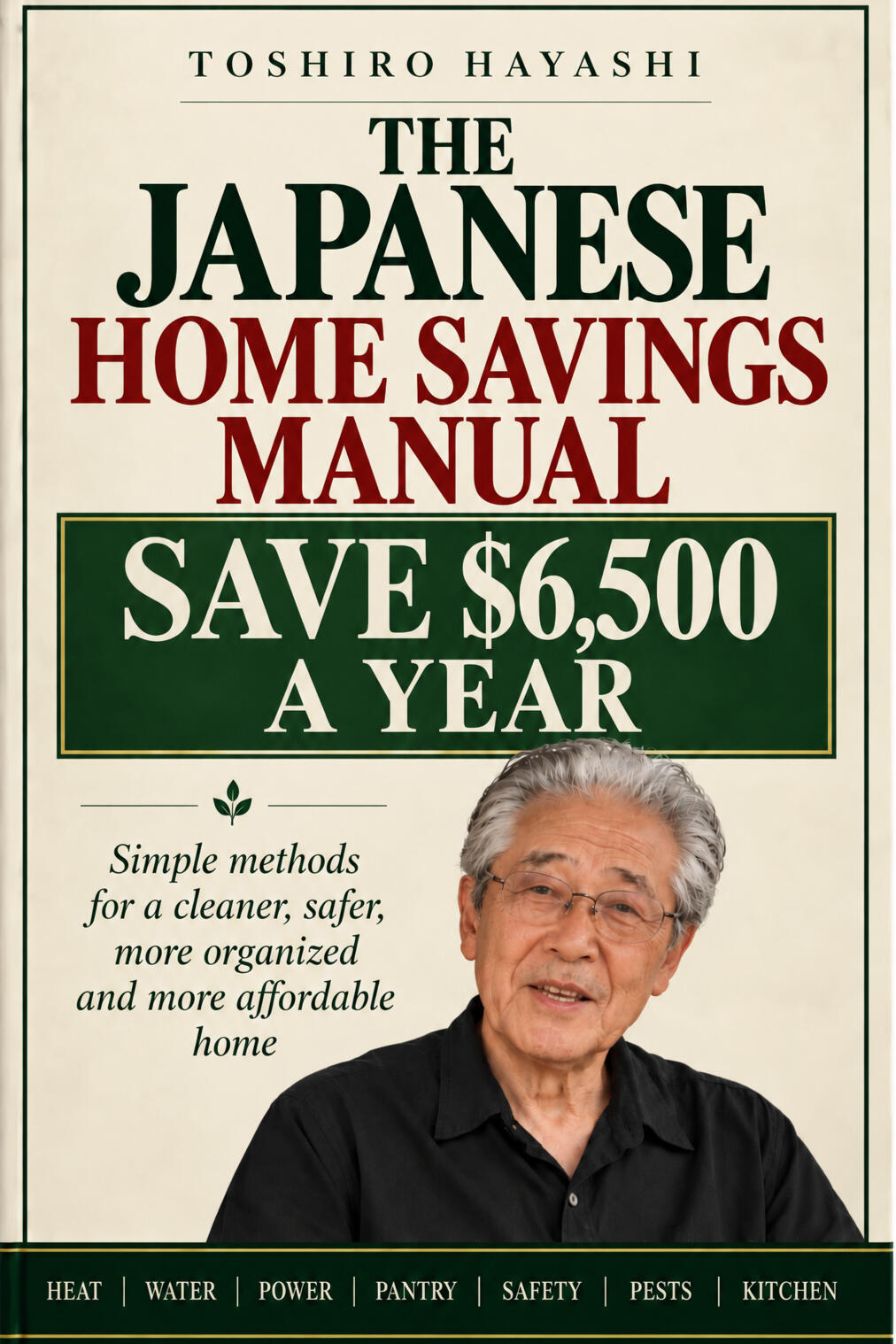
ILLUSTRATED EBOOK · 1,400+ PAGES · FIRST EDITION
The complete Japanese system to cut $4,500–$6,500 a year from your home.
Sealed drafts. Curtains drawn at dusk. A hot-water bottle. The kotatsu blanket. A rain barrel.
The clothesline. Rice stored the old way. Miso and pickles made at home. Earthquake straps on the shelves. A nightlight path to the bathroom. Grab bars by the tub. The monthly money review. One hundred eleven methods Japanese families have quietly kept for generations, with the exact materials, today's prices, and step-by-step instructions. Most homes earn the $47 back inside the first month.
INSTANT ACCESS · PAY ONCE · YOURS FOREVER
Where your money quietly leaks. And how the old ways stop it.
Lay last year’s bills on the kitchen table. The left column is what a typical American household of four pays each year. The right column is the same home after the methods in the Manual.
A typical household
PER YEARU.S. household averages · EIA · BLS Consumer Expenditure Survey · USDA
The same household, after the Manual
PER YEAREvery line has its own chapter in the Manual, with materials, prices and the step-by-step.
Exactly what you get for $47.
One hundred eleven numbered chapters. Each one with the materials, today’s prices and the step-by-step. Start with the ones that fit your home. You do not have to do all of them.
Warm in winter, cool in summer, without the bill.
- Warming the person, not the room
- Find exactly where your house loses heat
- Drafts, curtains and the window habits that cost nothing
- Heat only the rooms you actually use
- Summer cooling without the waste
Every drop paid for once, not twice.
- The fifteen-minute Leak Walk
- The dripping tap and the running toilet, fixed
- Read your water meter and catch a hidden leak
- Rain barrels: free water from your own roof
- Keeping pipes from freezing and bursting
Rice, miso and the two-week reserve.
- The pantry as a system: shelves, rotation and labels
- Rice, beans and dry goods, bought and stored right
- Tsukemono: simple pickling at home
- Miso, soy sauce and the fermented staples
- The Two-Week Household Reserve
Cooking that wastes nothing.
- Using everything: scraps, stock and leftovers
- Seven tools worth owning, and nothing more
- Rice cooked properly, every time
- Knives chosen, sharpened and kept for life
- One-pot and small-portion cooking
Shop once a week. Throw nothing away.
- Shopping once a week, with a list
- The refrigerator arranged for less waste
- Reading prices by unit, not by the sticker
- Buying rice, fish and vegetables in an American store
- Cook once, eat twice
Wash less. Dry free. Mend what’s worth keeping.
- Washing less, washing better
- Line drying, indoors and out
- Folding and storing clothes the Japanese way
- Stains: what to try first
- Mending and visible repair
A dry, safe bathroom that costs less to run.
- Wash first, soak after: the Japanese bath habit
- Keeping a bathroom dry
- Mold: prevention, and its honest limits
- Drains, traps and slow water
- A safer bathroom floor
A clean house without a cupboard full of bottles.
- Five cleaners and nothing else
- Vinegar, baking soda and soap: uses and limits
- The genkan: shoes off at the door
- The cleaning rhythm: daily, weekly, seasonal
- Dust, fresh air and open windows
Less stuff, and every thing in its place.
- One in, one out
- Closets, shelves and open space
- The garage as a workshop
- Paper, documents and the household file
- Labels, lists and the house notebook
A small garden that feeds the kitchen.
- The small vegetable garden, started modestly
- Japanese vegetables in an American garden
- Soil, compost and free autumn leaves
- Reading your yard through the seasons
- Closing the garden in autumn, opening it in spring
Prevention first. The exterminator last.
- Prevention before treatment
- Ants and kitchen insects
- Mice and rats: closing the entry points
- Mosquitoes, ticks and yard habits
- When to call a professional
Small fixes now, so you skip the big bills later.
- The monthly check that catches problems early
- Doors, hinges, handles and small repairs
- Wood, rust and moisture: what to look for first
- Roof and gutters: what to notice from the ground
- When a repair becomes a professional job
Earthquake-proof, fire-safe and ready.
- Earthquake-proofing the home
- Fire and kitchen safety
- 17 small home-security habits
- The nighttime safety routine
- The home emergency checklist
A safer, happier home after 60, the Japanese way.
- Living alone after 60: 15 Japanese habits for a safer home
- The Japanese morning routine that gives every day a purpose
- The $20 weekly routine that keeps life interesting
- Staying independent after 70: 12 small habits
- 15 simple hobbies that keep mind and hands active
- The $0 plan for staying connected
The household account book, and what it quietly saves.
- The household account book
- The monthly household savings review
- Repair, replace, or do without
- Buying fewer, better things
- Planning for large expenses
- Building a household reserve before you need it
111 chapters in 15 sections, plus the Appendix: tools, Japanese terms, the seasonal calendar, 13 checklists and the savings ledger.
What people did with the Manual in the first month.
Three different experiences, one practical household manual. From lowering monthly bills and making simple home improvements to living safely and independently after 60, these stories show how small changes can make everyday life easier, more comfortable, and more affordable.
I’ve bought plenty of home improvement books over the years, but honestly I’ve never come across anything this detailed for $47. There are 1,400 illustrated pages and 111 chapters, and everything is explained step by step. I followed the draft-sealing instructions over one weekend and already noticed a difference in how warm the house stays. I’ve spent more money on books that taught me far less. Wish I’d found this years ago.
Our heating bill was $312 last winter, and I was tired of paying that much. I tried the window-sealing tips and a few other things from the book. Our next bill came down to $231. Wish I’d bought this book sooner.
I’m 68 and have been living alone since my husband passed away. I bought this book thinking I’d find a few money saving tips, but the chapters about living alone after 60 really surprised me. The morning routines, little things to keep the house safe, and ideas for staying busy have been so helpful. I’ve read quite a few books about retirement and getting older, but most just tell you to stay positive. This one actually gives you things to do. I wish I’d found something like this sooner.

Toshiro Hayashi.
I was born in Japan and have lived in the American countryside for many years. I am in my sixties now. Much of what is in this book began with what my parents and grandparents taught me at home: use what you need, keep things in their place, repair before replacing, and do not waste something that can still be useful.
Living in America taught me how to carry those habits into a different kind of home, with different seasons, appliances, tools and hardware. Some of these methods come from the videos I share on my YouTube channel. Others I learned simply by living in a house for many years, maintaining it, repairing it, and paying the bills.
This First Edition puts all of it in one place. One hundred eleven chapters across fifteen sections, with the materials, today’s prices and the step-by-step written down. Over 1,400 pages, illustrated throughout. Where a method saves money, I tell you how. Where a job belongs to a professional, I say that too.
At my age, you start to think about what you will leave behind. I wrote this book because I do not want what my parents and grandparents taught me to disappear with me. If one chapter saves you a dollar, keeps a pipe from bursting, or makes your home a little safer for someone you love, then every one of these pages will have been worth writing. And that would mean more to me than I can say.
$47 once. No subscription. Yours forever.
Instant access: the book is in your inbox within a minute of paying. Read it on your phone, tablet or computer, or print the chapters you need for the kitchen table. Every copy comes with a 7-day money-back guarantee, no questions asked. If it isn’t right for your home, send one email and we refund the $47 the same day.

The Japanese Home Saving Manual
One hundred eleven household methods for heat, water, pantry, kitchen, laundry, cleaning, garden, safety and money, with the materials, today’s prices and the step-by-step. Start with the ones that fit your house. Leave the rest for later.
INSTANT ACCESS · PAY ONCE · YOURS FOREVER
🔒 SECURE CHECKOUT · VISA · MASTERCARD · PAYPAL · APPLE PAY · 7-DAY REFUND
Questions people ask before they click.
Will these methods work in my climate?
Yes. The methods are written for ordinary North American homes — from cold northern winters to hot summers, dry plains, and humid coastal areas. Each chapter explains what works best depending on whether your biggest expense is winter heating, summer cooling, or year-round water use. The smaller fixes work in almost every climate, while larger projects include the adjustments needed for different conditions.
I'm not handy. Is this still useful for me?
Absolutely. Many of the most effective methods require little or no construction — sealing small drafts, hanging window quilts, adjusting the water-heater temperature, using a clothesline, checking your home each month, and tracking your savings. For bigger projects, the book also explains when it's better to hire a professional, so you don't need to be handy with tools to benefit.
I'm not good with computers. Will I be able to read it?
Of course. You don't need any computer skills. After purchasing, you'll receive the book by email. Just click the link, and it opens much like a photograph. No special app to install, no account to create, and no password to remember. If you have trouble opening it, simply write to me. I'll personally help you through the process or give you your money back. Either way, you won't be left struggling.
Can't I find all this free on YouTube?
You can certainly find individual tips online. But on YouTube, you'll hear hundreds of different opinions, and it's often difficult to know which advice actually works. This manual brings the methods together in one place, arranged in the right order, with practical instructions, real-world experience, and honest explanations of their limitations. Instead of searching through dozens of videos, you'll have everything organized in one book that you can open whenever you need it.
How long until I see savings?
Some changes can make a difference on your very next utility bill, such as sealing drafts or adjusting your water-heater temperature. A clothesline can begin saving you money from the first sunny week. Finding and fixing water leaks may also reduce costs within the first month. Larger improvements, like storm windows or attic insulation, generally take longer to pay for themselves, sometimes within a season or more.
I rent. Can I still use this?
Yes. More than half of the methods can be used in rental homes without major modifications or landlord approval. Window quilts, simple draft sealing, clotheslines where permitted, cleaning changes, monthly home checks, and the savings workbook can all be useful whether you own your home or rent it. You don't need to own a house to start reducing household expenses.
Is this a subscription? Will you charge my card again?
No. It's a one-time purchase. You pay once, and the manual is yours to keep. There are no monthly charges, no membership fees, and no trial period that turns into a subscription. You won't be charged again for this purchase.
What if it's not for me?
You have seven days to decide. If you feel the manual isn't right for you, simply send me an email within that period, and I'll give you a full refund. No complicated process and no questions asked. You can keep the manual, too.
Stop paying up to $6,500 a year you don’t have to.
$47 once. Instant access. 7-day money-back guarantee. Most homes win back the $47 in the first month. First Edition, 1,400+ pages, lifetime updates.
GET THE MANUAL · $47 →
Win back the $47 this month.
Fix one dripping tap and set up the “first in, first out” fridge shelf. That is how most homes win back the $47 in the first month. 111 chapters in all, and a 7-day refund if it’s not for you.
GET THE MANUAL · $47 →